As the winter chill sets in, there’s nothing like relaxing in a warm hot tub under the stars. But keeping a hot tub cozy during colder months can lead to higher energy bills. With a few savvy tips, you can keep energy costs low without sacrificing that luxurious winter soak.
1. Invest in a High-Quality Insulated Cover
A well-insulated cover is essential for keeping your hot tub warm in cold weather. Heat rises, so without a solid cover, your hot tub loses a lot of energy overnight or between uses. A thick, quality cover helps trap that heat and reduces the strain on your heater.
• Tip: Inspect your cover periodically for any wear, cracks, or damage. Even small tears can let heat escape.
• Pro Tip: Using a cover lift can make it easier to handle your cover and prevent any unnecessary wear or bending.
2. Keep Your Hot Tub at a Consistent Temperature
It may seem logical to lower your hot tub’s temperature between uses, but letting it cool down and then re-heating actually consumes more energy. Instead, set your hot tub to the temperature you enjoy and leave it there. This keeps the heating system from having to work overtime and maintains an energy-efficient environment.
• Recommended Temperature: A setting between 100-104°F is ideal for most users.
Keeping your tub at a steady temperature helps avoid energy spikes, making it a more economical choice during colder months.
3. Clean and Replace Filters Regularly
Good filtration is essential not only for clean water but for energy efficiency. Clogged or dirty filters force your system to work harder, which can lead to higher energy use. By keeping filters in top shape, you ensure the water circulates smoothly, reducing the strain on your heater and other components.
• Tip: Check and rinse your filters every month with a hose to remove any build-up.
• Pro Tip: For the best performance, consider replacing filters every 6-12 months, depending on how frequently you use the tub.
4. Maintain Proper Water Levels
Keeping your water level within the recommended range is crucial for your hot tub’s efficiency. When water levels drop too low, your hot tub’s pump and heater have to work harder to maintain the temperature, using more energy in the process. Be sure to keep an eye on water levels, especially in winter when evaporation might be higher.
• Tip: Top up your hot tub’s water levels regularly to ensure it runs at peak efficiency.
5. Create a Wind Barrier
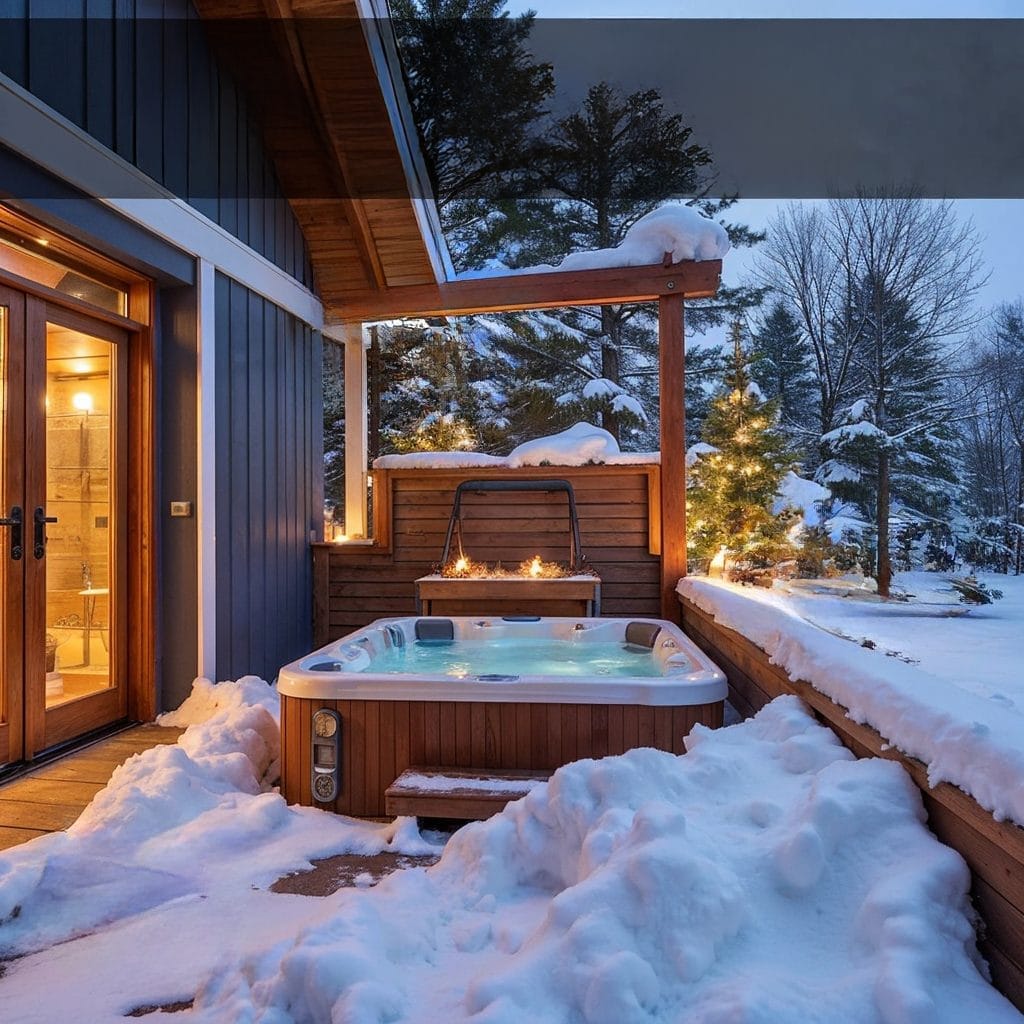
Cold winds around your hot tub can lead to heat loss, causing your heater to use extra energy to maintain the set temperature. By creating a windbreak, you protect your tub from the elements, helping it stay warm with less energy use. A small privacy fence, strategically placed plants, or a screen can make a big difference.
By following these practical energy-saving tips, you can enjoy your hot tub all winter without facing steep energy costs. With the right maintenance and a few adjustments, a cozy winter soak is just a few steps away!